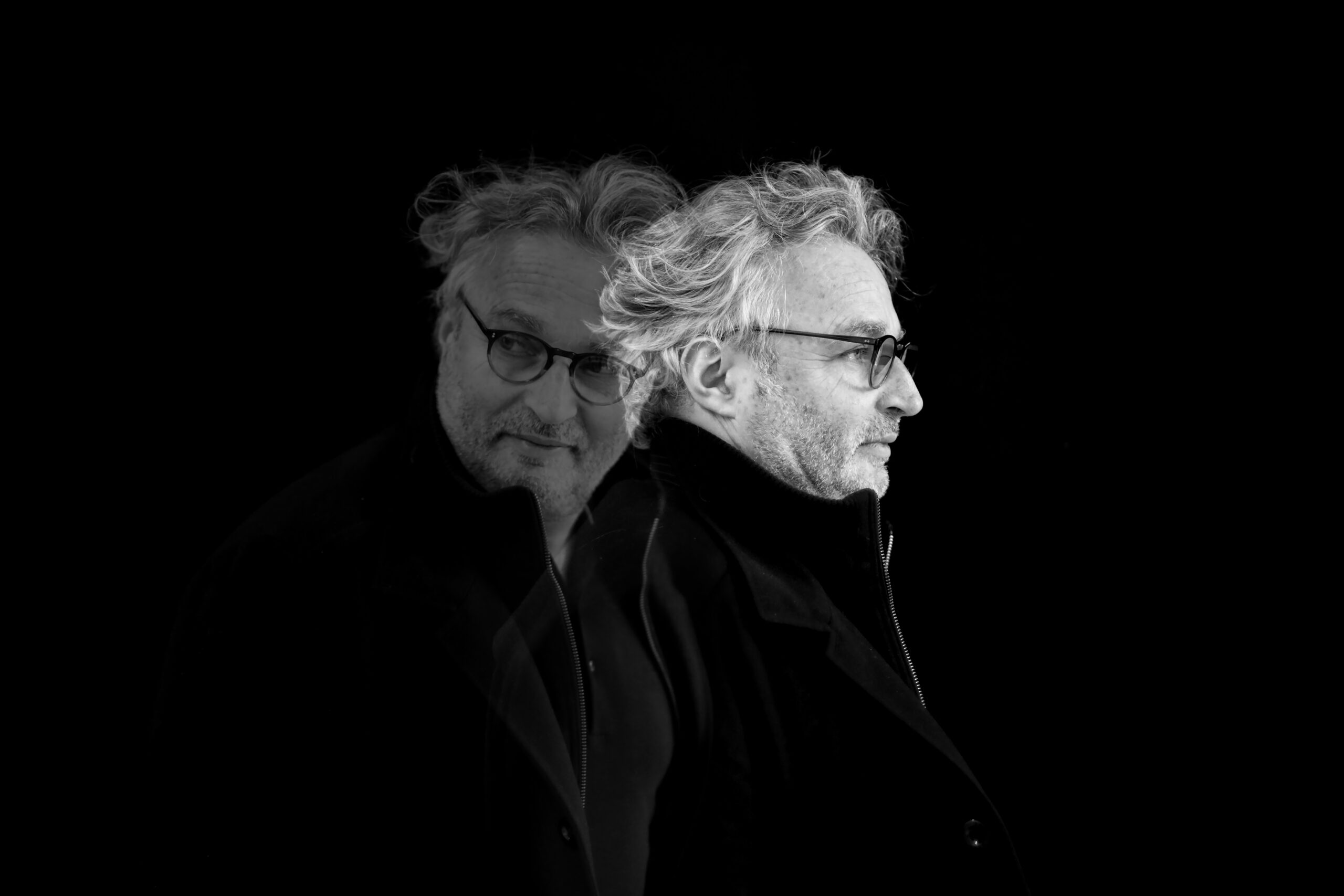
PIERRE MARIE BRISSON - Biography in a few dates
The French painter Pierre Marie Brisson was born in Orléans on 11 June 1955. As a child, he was fascinated by prehistory and painting. At the age of 14, he began to paint his first pictures.
In 1972, he met the painter Bernard Saby, who encouraged him. In 1975, at the age of 19, he held his first exhibition at the Charles Péguy Museum in Orléans. He then exhibited at the Lucette Herzog Gallery in 1978 and started engraving at the Pasnic workshop in Paris in 1979.
In 1980 he had his first exhibition in New York. From 1981 onwards, Pierre Marie Brisson exhibited regularly in France, Germany, Sweden, Japan, the Philippines, South Korea, Canada and the United States, where he was recognised as a major artist.
In 1994, he left Paris to live between the south of France and California. Finally getting closer to his element, the sea, he settled in Camargue where he lives today.
His work can be found in the collections of museums in New York, Los Angeles and San Francisco, as well as in France, Germany, Switzerland...
Sources of inspiration
"Visual and emotional pleasures await those who let Pierre Marie Brisson's art quietly seize their consciousness. Robert Flynn Johnson, curator at the Fine Arts Museum in San Francisco
Pierre Marie Brisson has always had a great passion for the heritage and traditions of Western art and civilisation. His work has embraced the entire range of Western art, from ancient cave paintings and frescoes to the art of the Renaissance and the early modern masters of the 19th and 20th centuries.
His deep admiration for Henri Matisse is evident in his rhythmic compositions and abstract configurations, with their exuberant colours. He has created a rich repertoire of poses, bodies, gestures and moods, whose aesthetic presence suggests a strong emotion.
His first works seemed to "come out of the ground", now they undulate in the sea wind, breathe light and exploit colour. Through his characteristic technique, between scratching and collage, his work favours matter and colour.
The Mediterranean definitely marks his work and his techniques. His art evolves, new, warm and soft lights, moving, organic and living curves, pure air and carnal emotions sign a new impulse, a rebirth and an artistic maturity. His sense of tradition coupled with his passion for the history of Western civilizations leads him to new creative processes. He composes works that pay homage to the rhythm and geometry that the masters of abstract or impressionism infused into their canvases. These forms, gestures, lines and moods make him a contemporary Fauvist.